Safe behaviour at the station, in the train and near the tracks.
Every day, more than 1.3 million passengers use SBB – because the railway is safe and reliable and because travelling by train is convenient and enjoyable. You can also help to ensure pleasant journeys with no unnecessary risks by following the most important rules for travel safety. That way, you will always arrive safely.
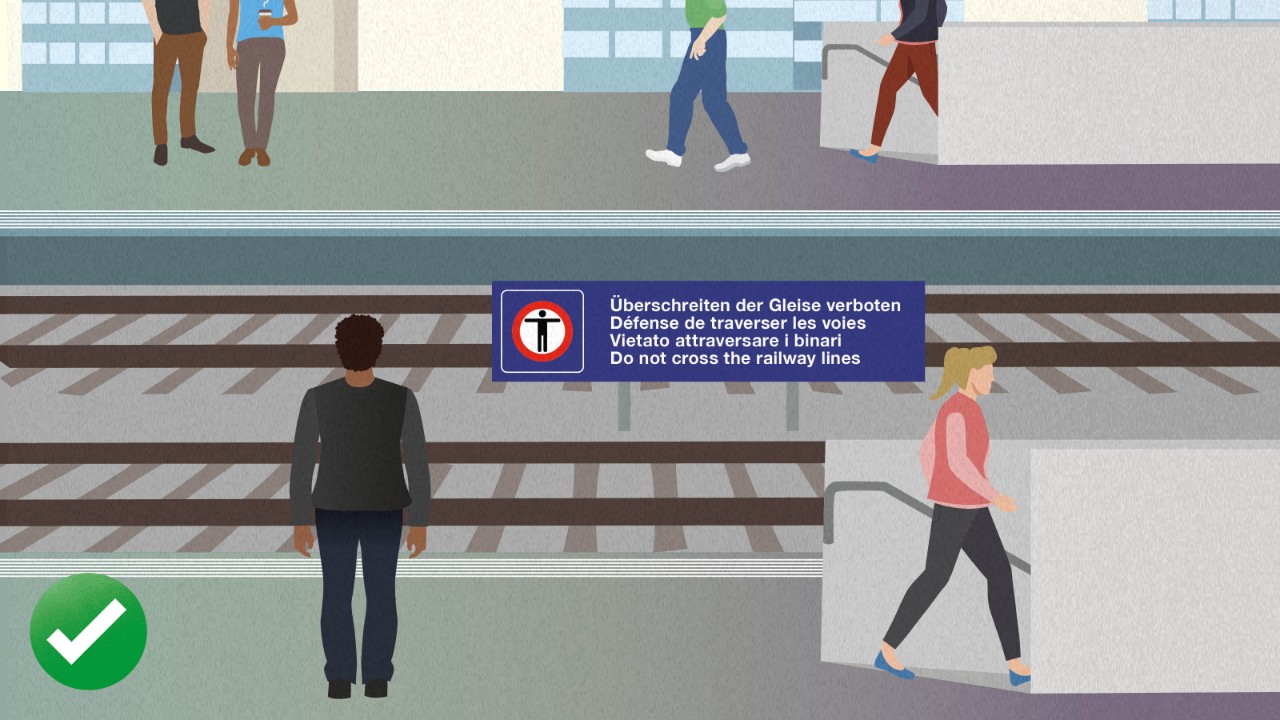
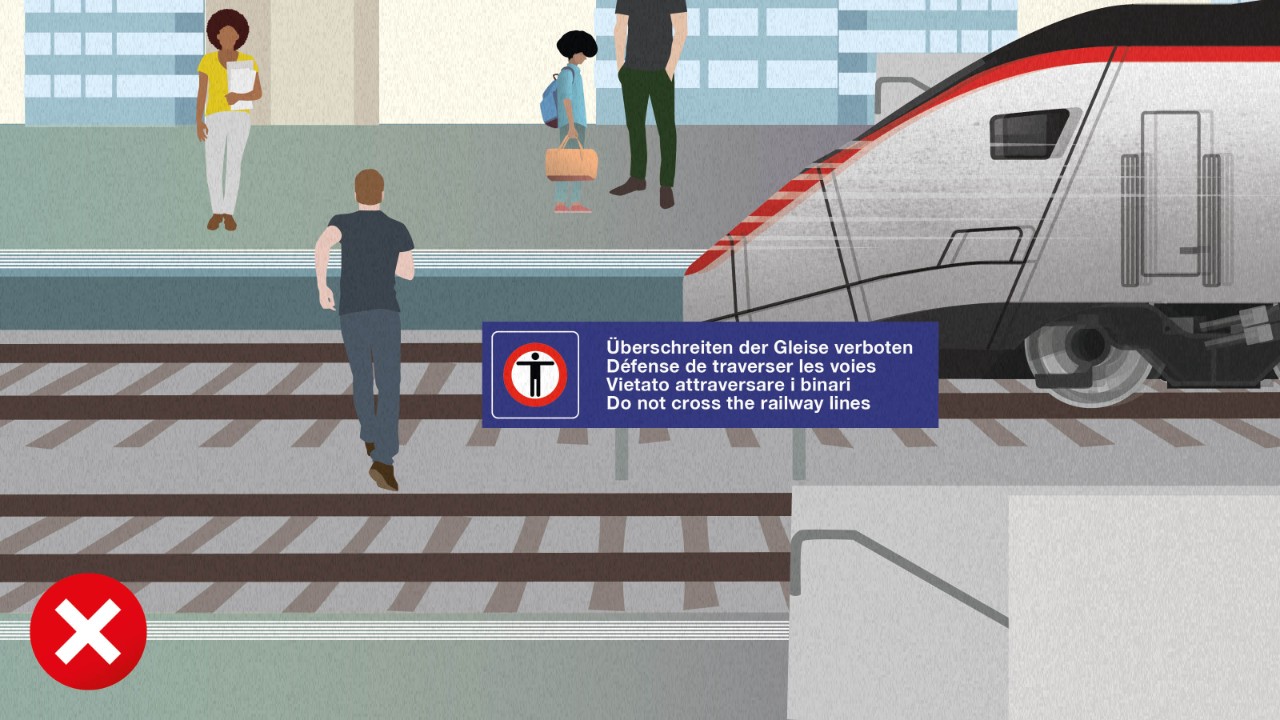
Get to the other side safely.
Use the pedestrian underpasses or footbridges when crossing the tracks and respect closed barriers at level crossings. Crossing the track where there is no crossing point is prohibited. Trains do not always run to the timetable and can pass by at any time. A train can cover almost 40m/s. Even with emergency braking, a train travelling at 140km/h may take up to one kilometre to stop. The engine driver has no chance – and neither does the person crossing the tracks.
Board safely.
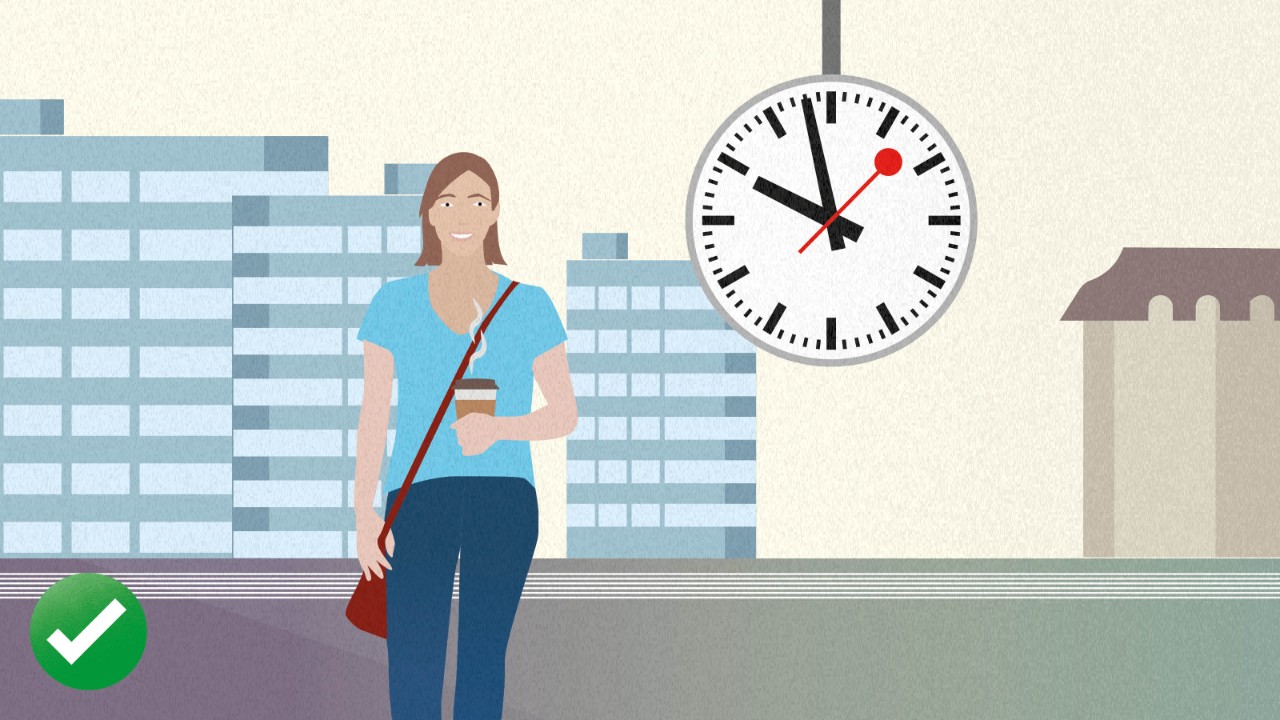
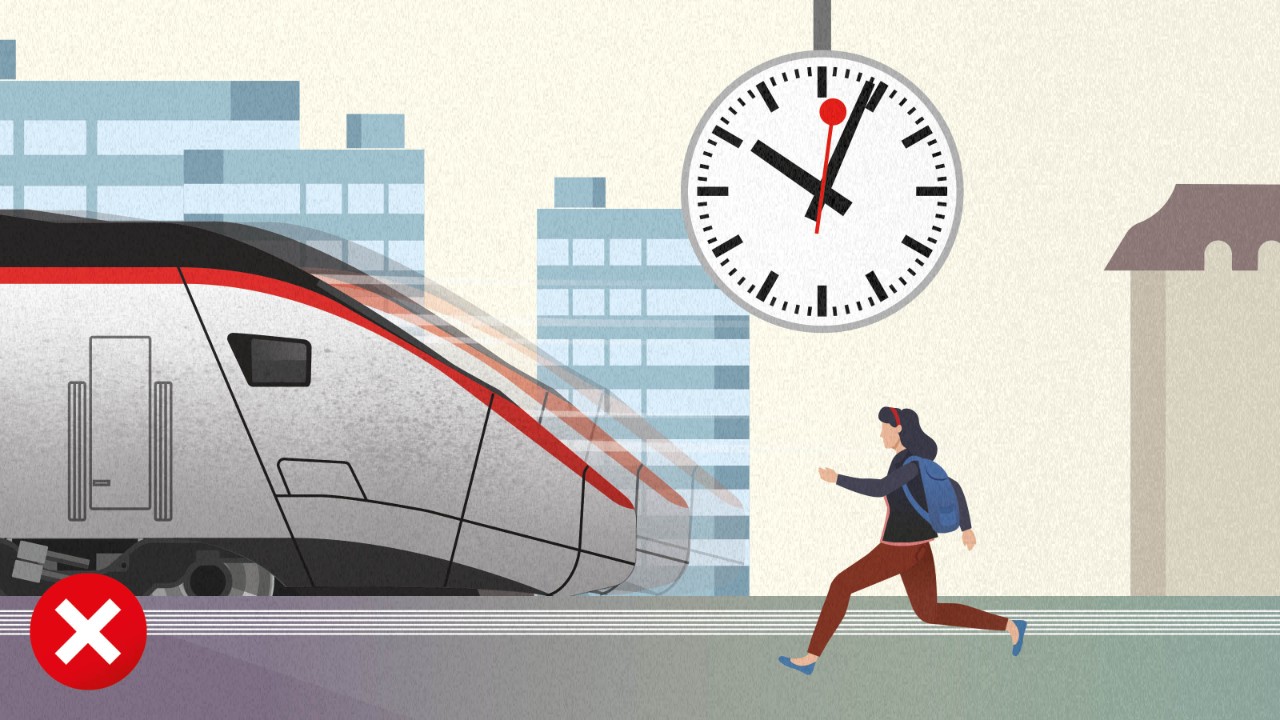
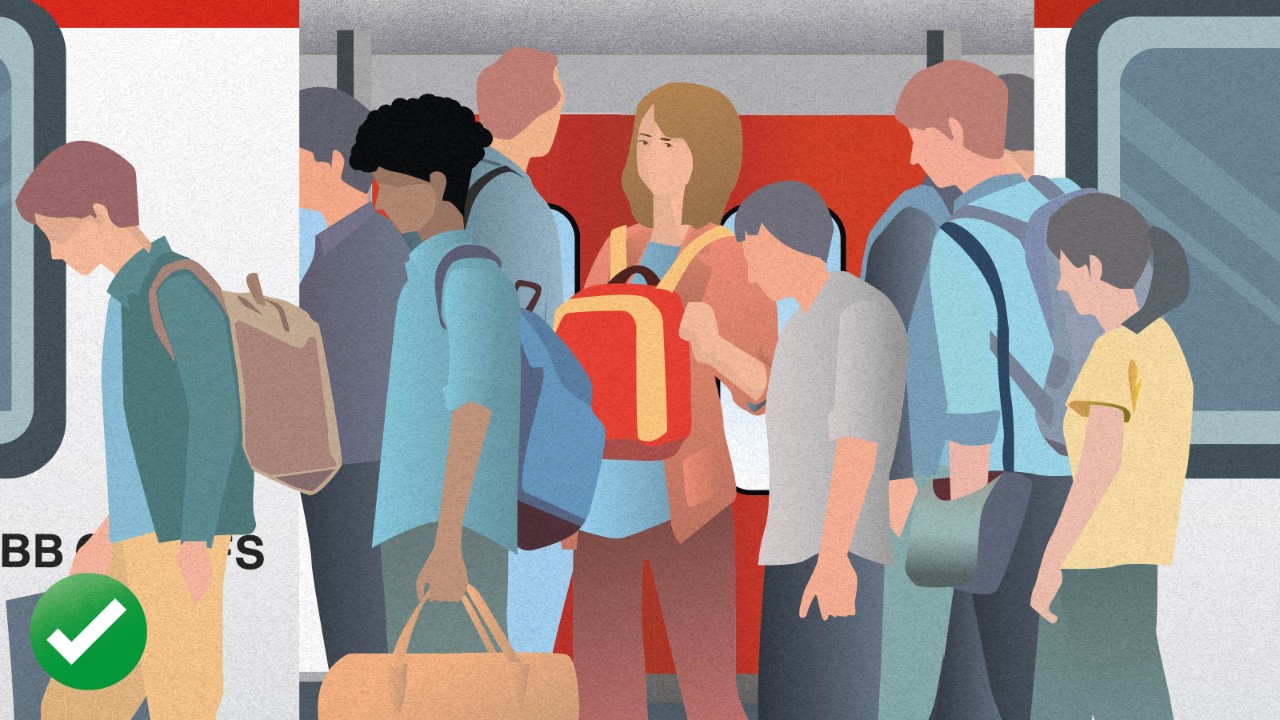
Arrive at the station several minutes before departure, so that you can board comfortably and safely. Please spread out along the platform to ensure the flow of people is not impacted. Do not cross the light sensor when the door is closing. Always press the "open" button to open the door again. Jumping aboard or touching a departing train is hugely reckless and dangerous. The footboards are folded in, and the doors are locked. There is a risk that you may get stuck and be dragged along, knocked down or pulled under the wheels.
Waiting safely.
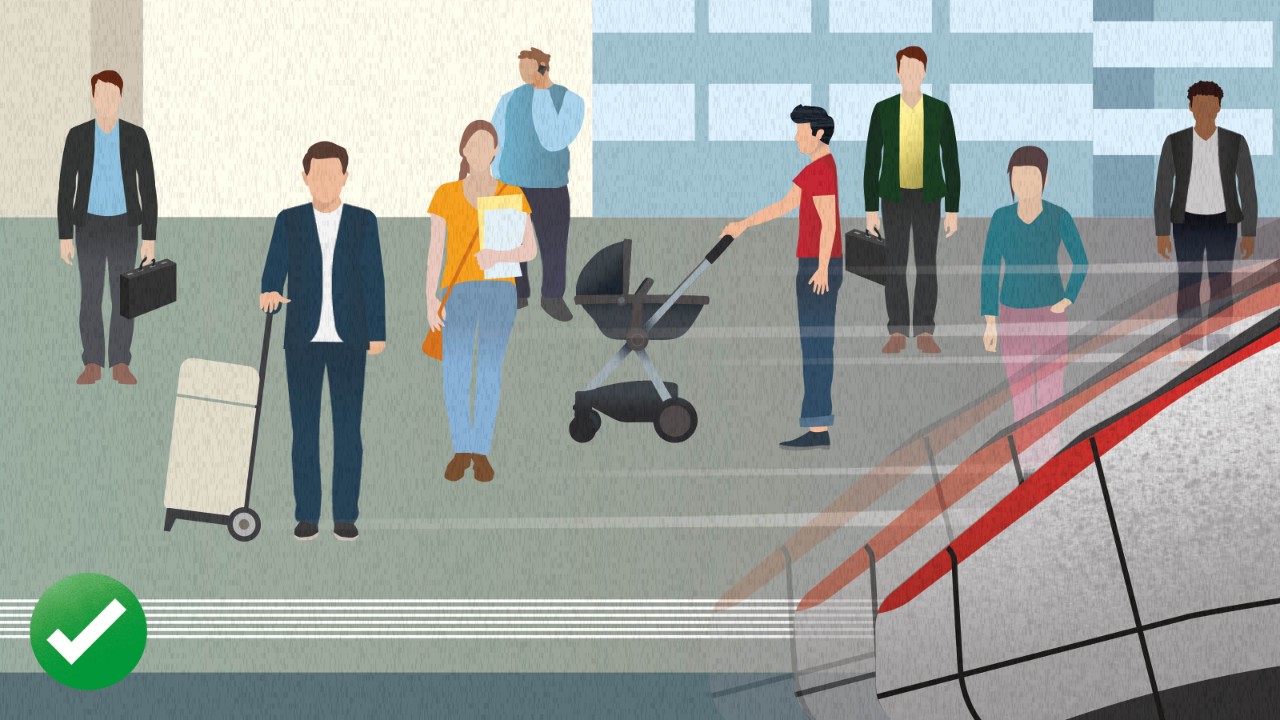
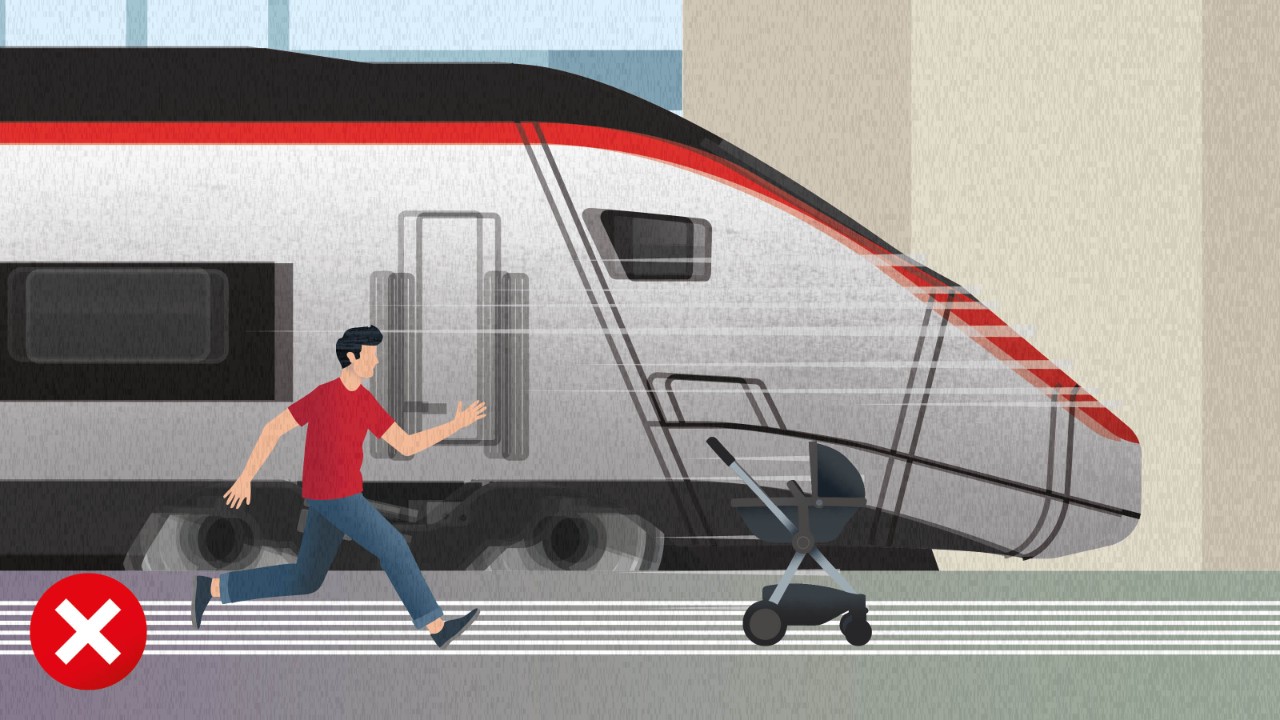
Always stay behind the white safety lines on the platform and hold on tightly to moveable objects, such as prams and pushchairs, when trains are arriving or passing through. Make sure that backpacks do not stick out beyond the white lines. Passing trains have a strong pull effect. Objects too close to the track can be swept up and thrown onto the track, or people can be dragged along. Do not use the area between the white line and the train as a shortcut or a clear path in the case of a crowded platform.
High voltage warning.
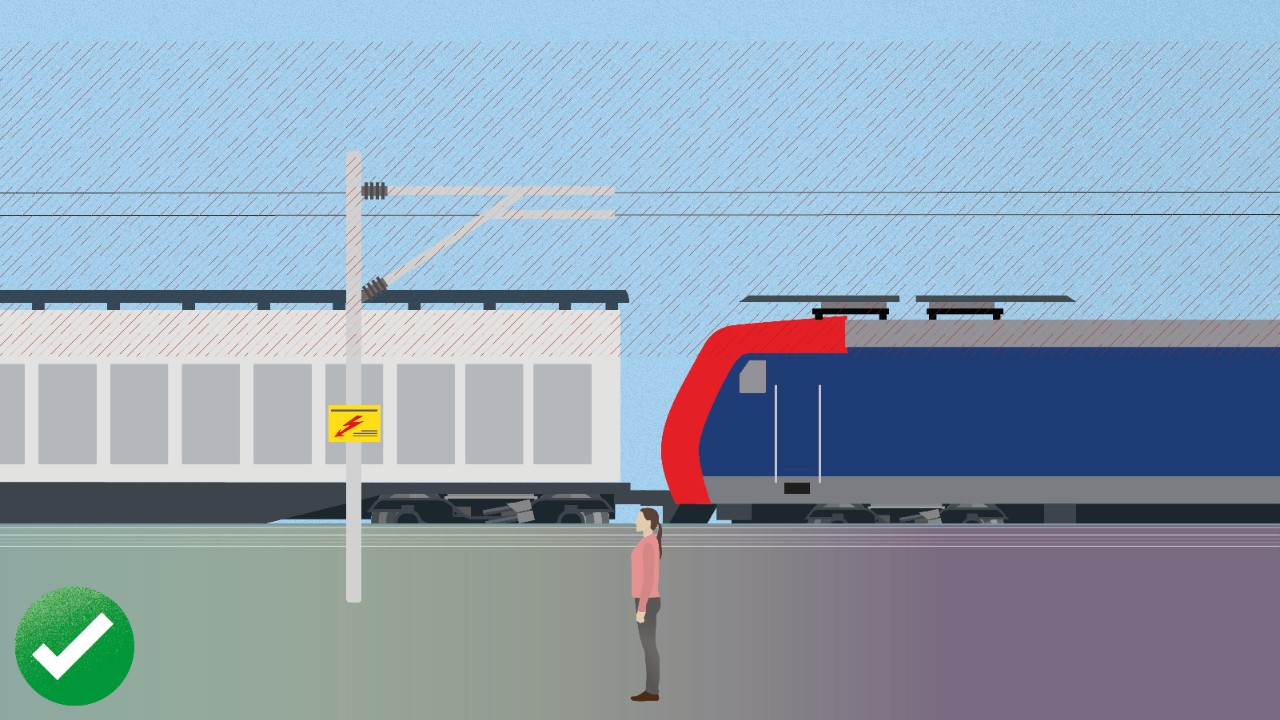
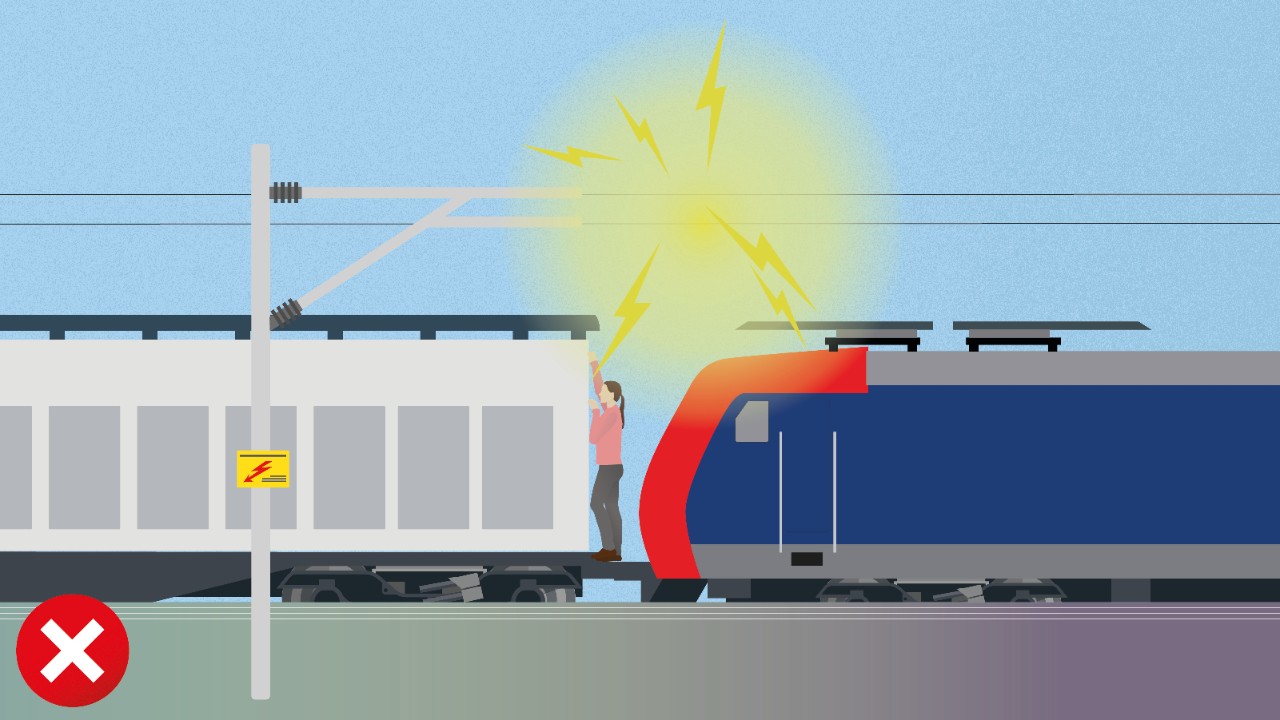
Climbing on railway coaches is extremely dangerous and strictly prohibited. Keep your distance from contact lines, stationary trains and freight wagons, both within and outside the station. The contact lines carry 15,000 volts. Getting close to or touching the contact lines can lead to life-threatening burns, serious internal and external injuries or death. Warn others about the dangers and avoid reckless stunts. If you see a dangerous situation, call the police immediately (117).
Hold on tight for safety.
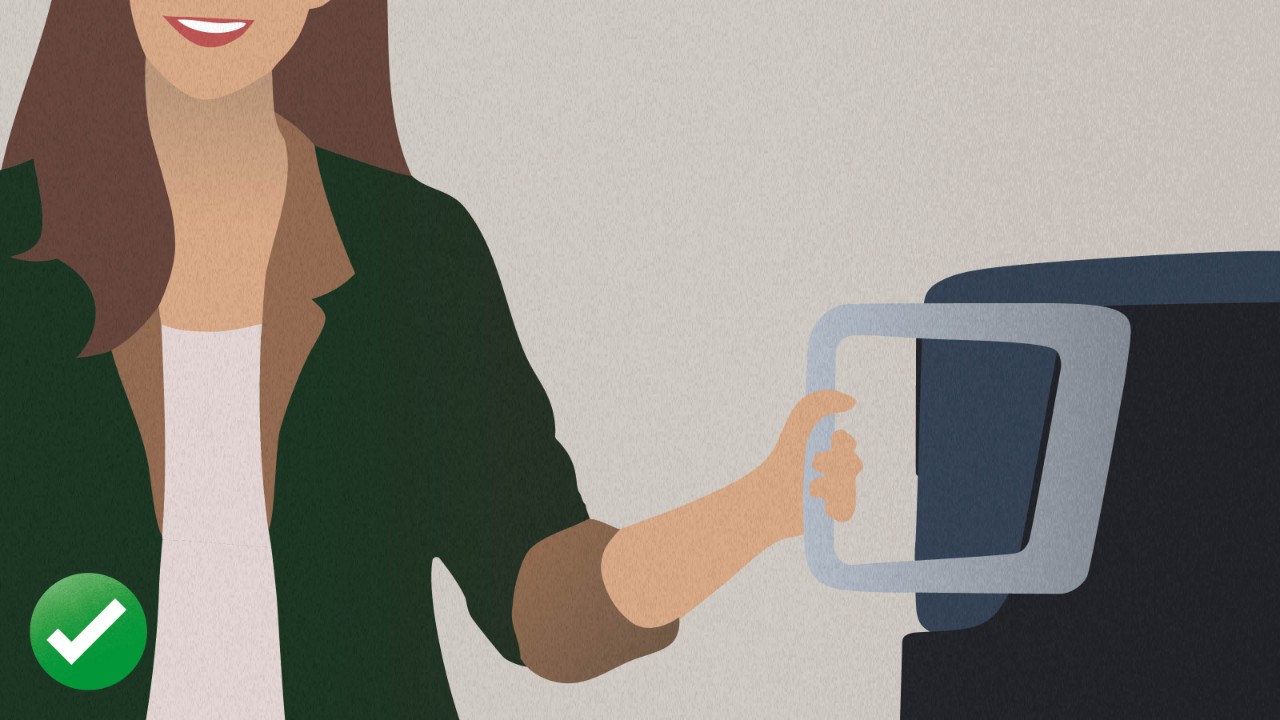
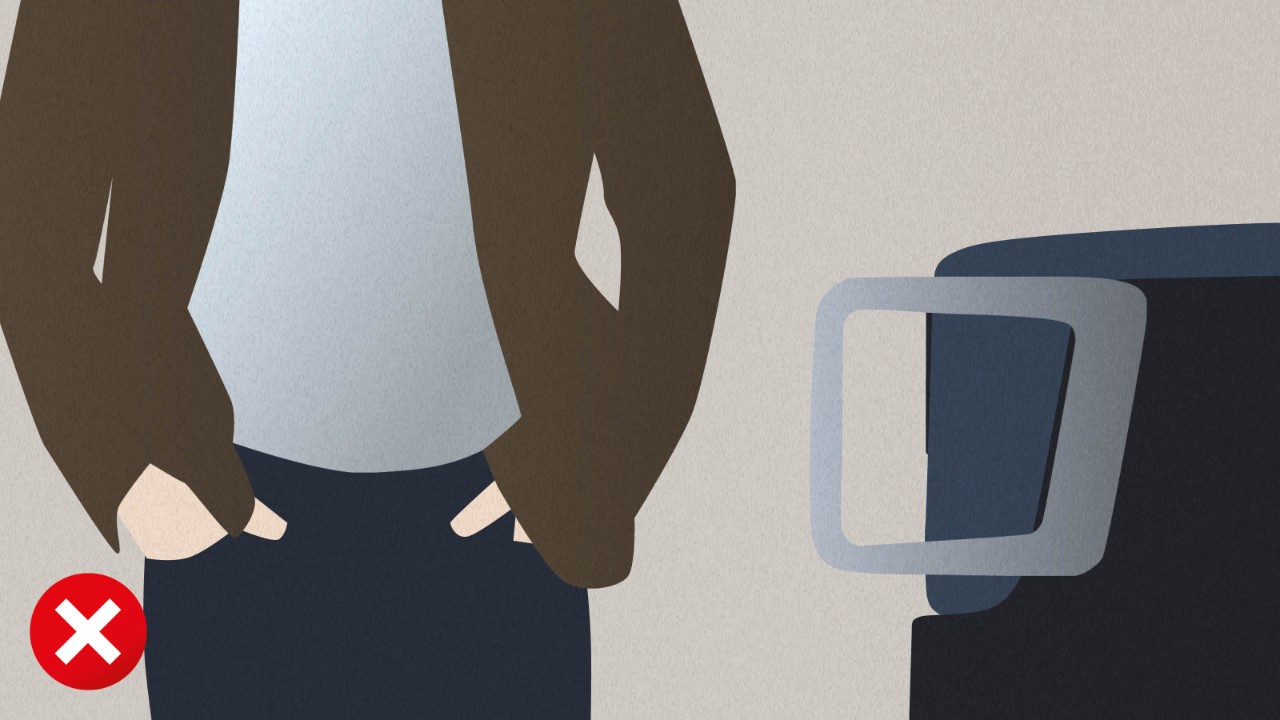
Always hold on tightly when the train is moving, especially on the stairs in double-deck trains. Use the grab poles, handles and handrails or stay sitting until the train stops at the station. Centrifugal forces on bends, changes in speed and passing over points can easily knock a person off balance. Hold on when you move around the train.
Stay alert on the move.
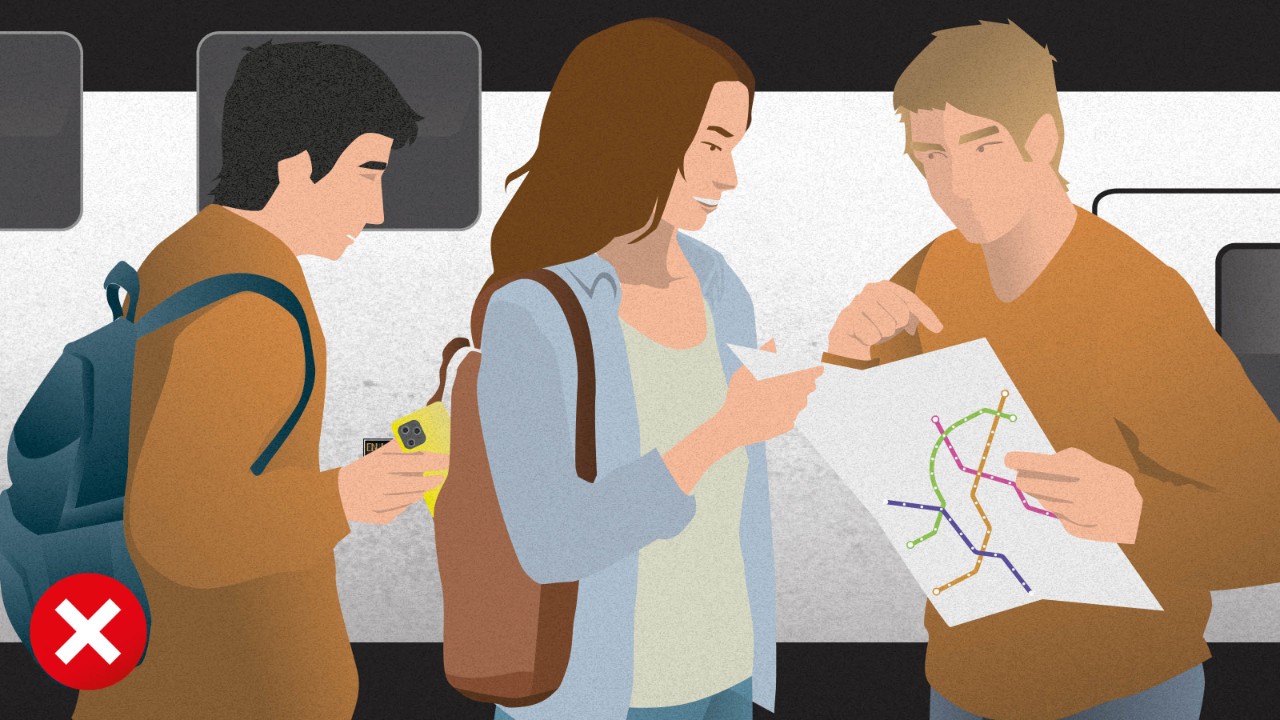
Keep your eyes and ears open when you move around the station to ensure a safe and pleasant journey for yourself and others. Walking with your eyes on your phone can lead to collisions with other people or vehicles. Wearing headphones at the station can mean you miss important announcements.
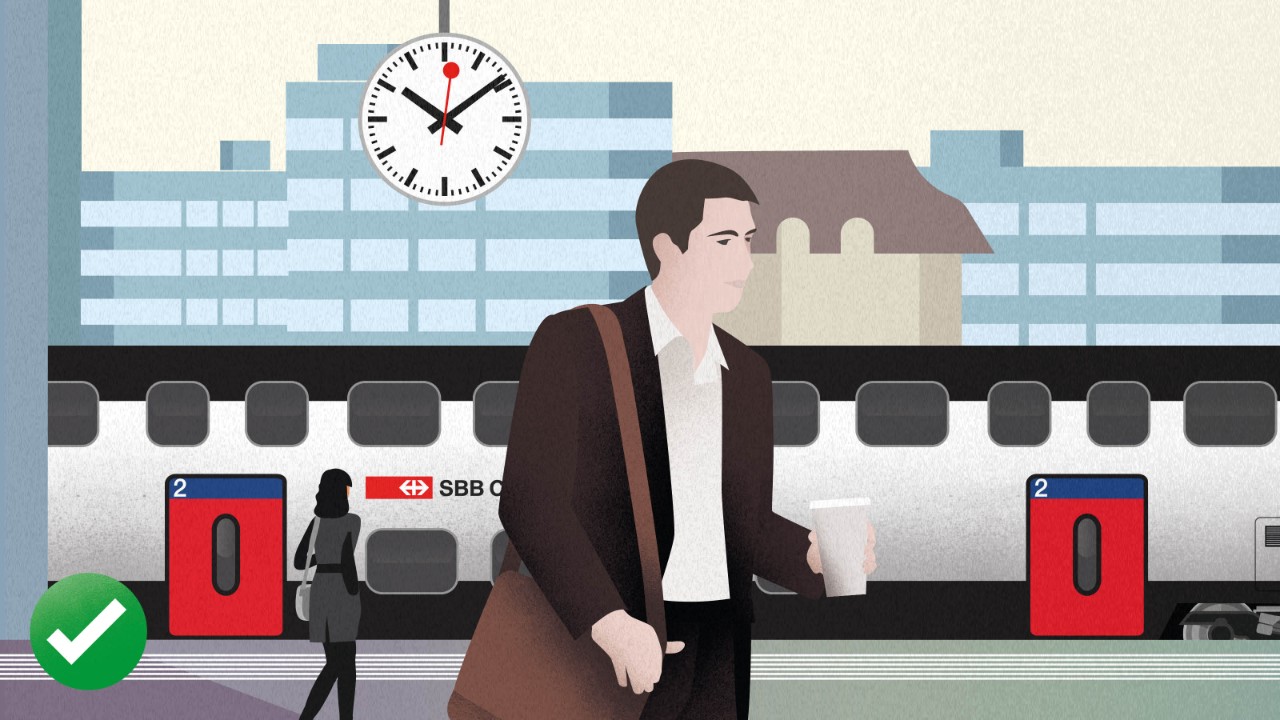
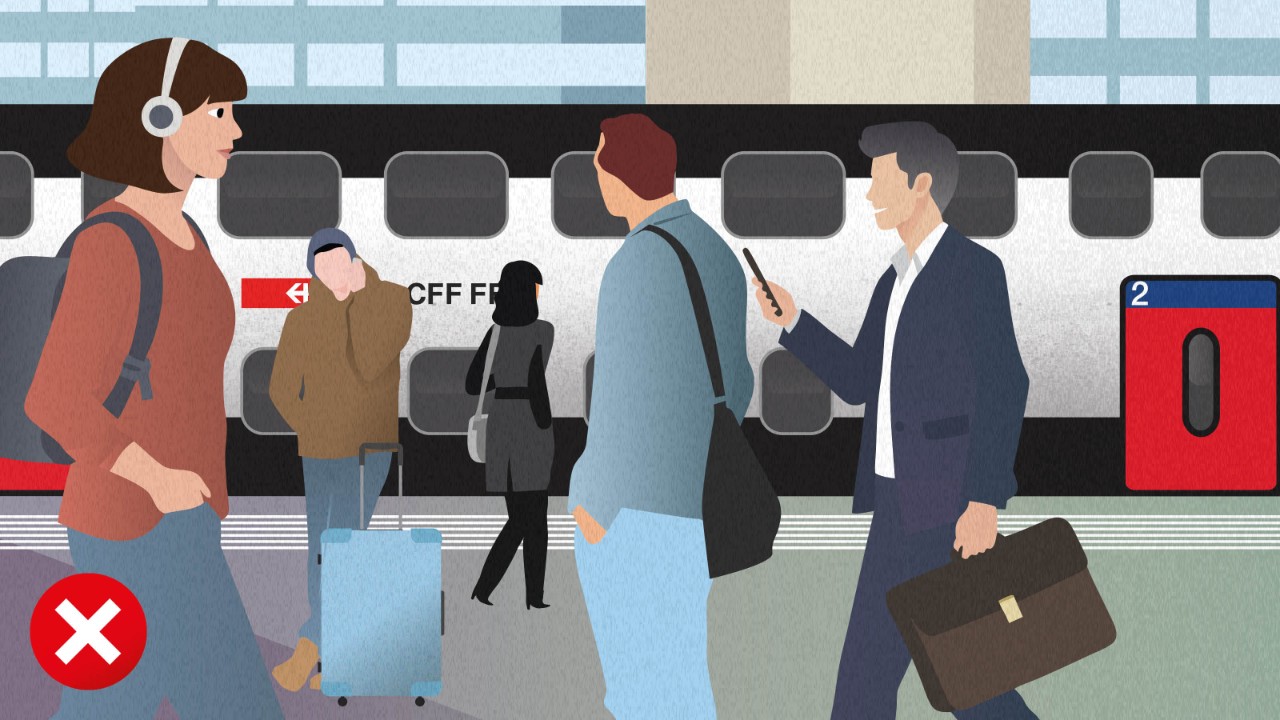
Dismount in the station.
Do not use vehicles or toys in the station area. Respect the prohibition on riding bicycles, skateboards, scooters etc. and ensure that children do not play near the tracks. Playing or riding bicycles, scooters or skateboards in the station is dangerous. For this reason, it is prohibited to use vehicles anywhere in the station (except wheelchairs and authorised journeys), including platforms, ramps, steps, concourses, footbridges and underpasses.
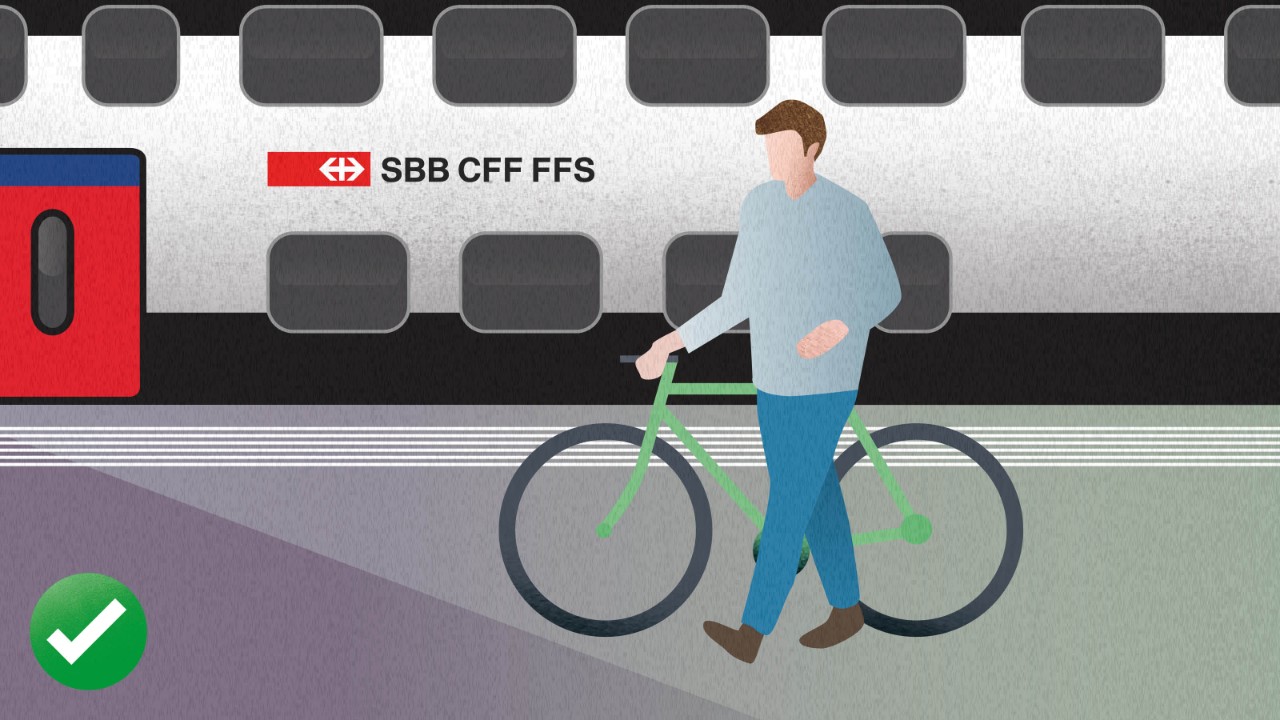
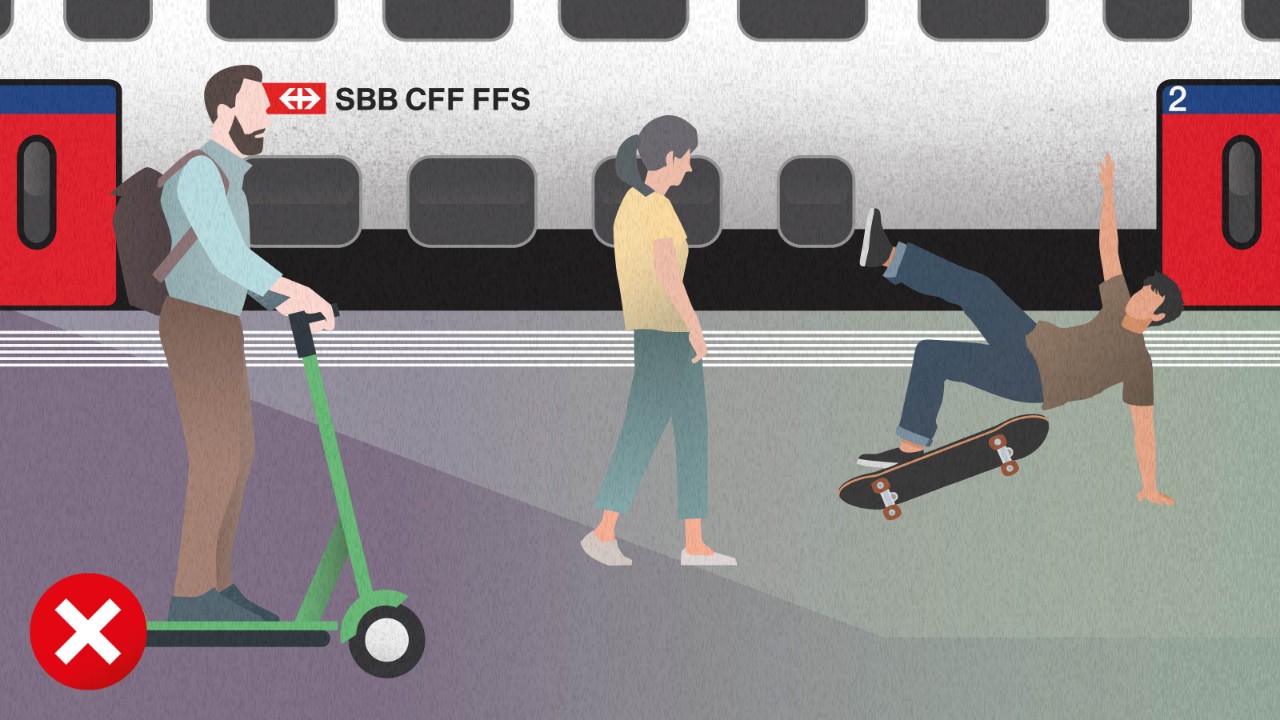
Bags closed, eyes open.
Keep an eye on your personal items at all times when at the station or on a train. Especially in crowds, wear your valuables close to your body, keep your bags closed and do not leave any items unattended. Do not leave any luggage unattended and do not move around the station with your bag open. Ensure personal items are not left unattended in the compartment, for example, if you leave your seat briefly.
Stow aluminium balloons safely.
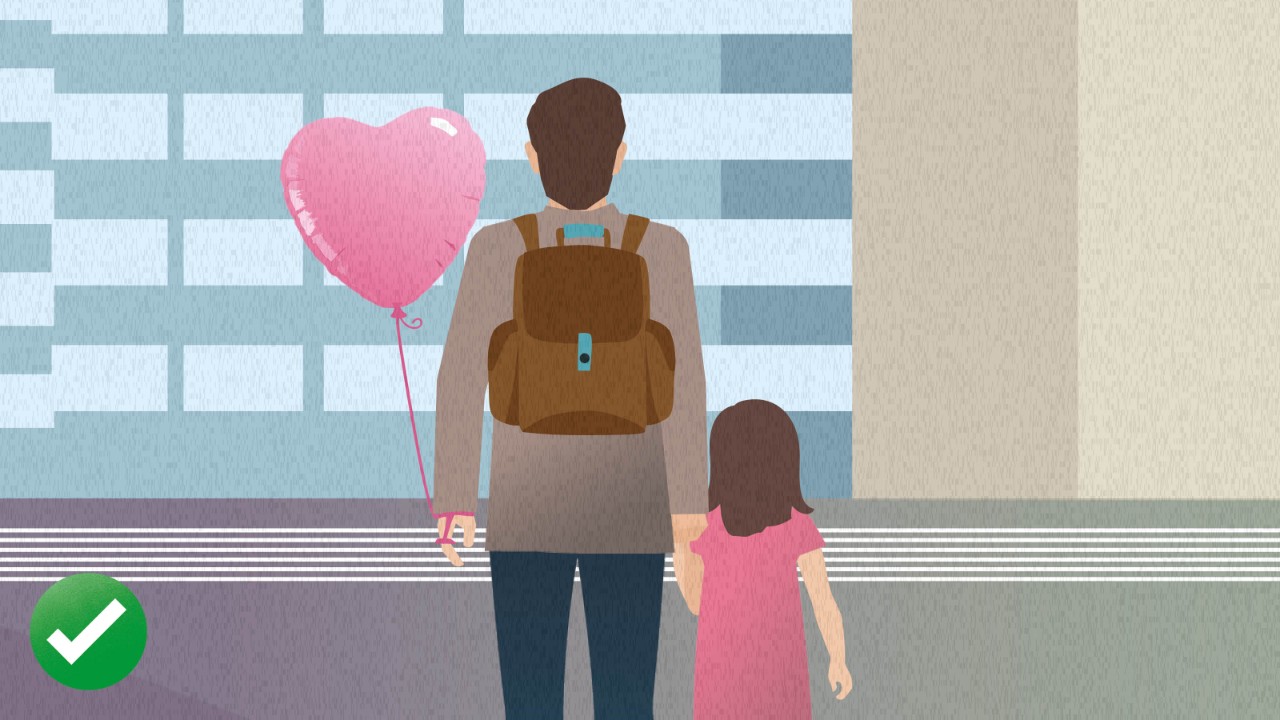
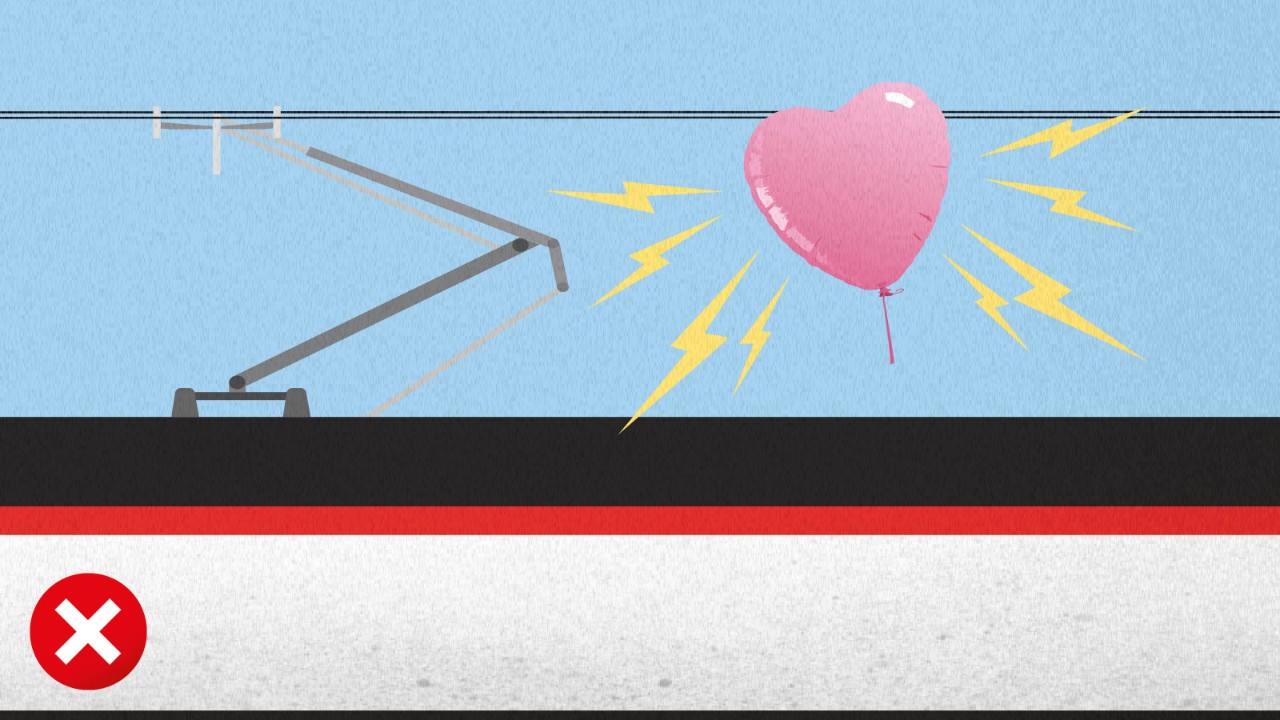
Ensure that metallic balloons do not fly away or come close to the contact line when boarding and disembarking. Tie down balloons securely until you have left the station. If metallic balloons get too close to the contact line, they can cause explosions and short circuits. This poses a risk to the contact line, the train and in the worst case, the passengers waiting on the platform.
Keep escape routes clear.
It is important that passageways and escape routes on trains are kept clear so that all passengers can move quickly and safely in an emergency. Do not place luggage items, pushchairs, wheeled suitcases, bicycles or shopping bags in door areas or aisles.
Stow your luggage in the designated areas. Help ensure that spaces intended for people with reduced mobility, pushchairs and wheelchairs are kept clear.
Additionally, in train stations, it is important that emergency, escape and access routes, as well as white guidance lines for people with visual impairments, are kept clear. Therefore, it is forbidden to sit or lie down on the ground or on staircases.
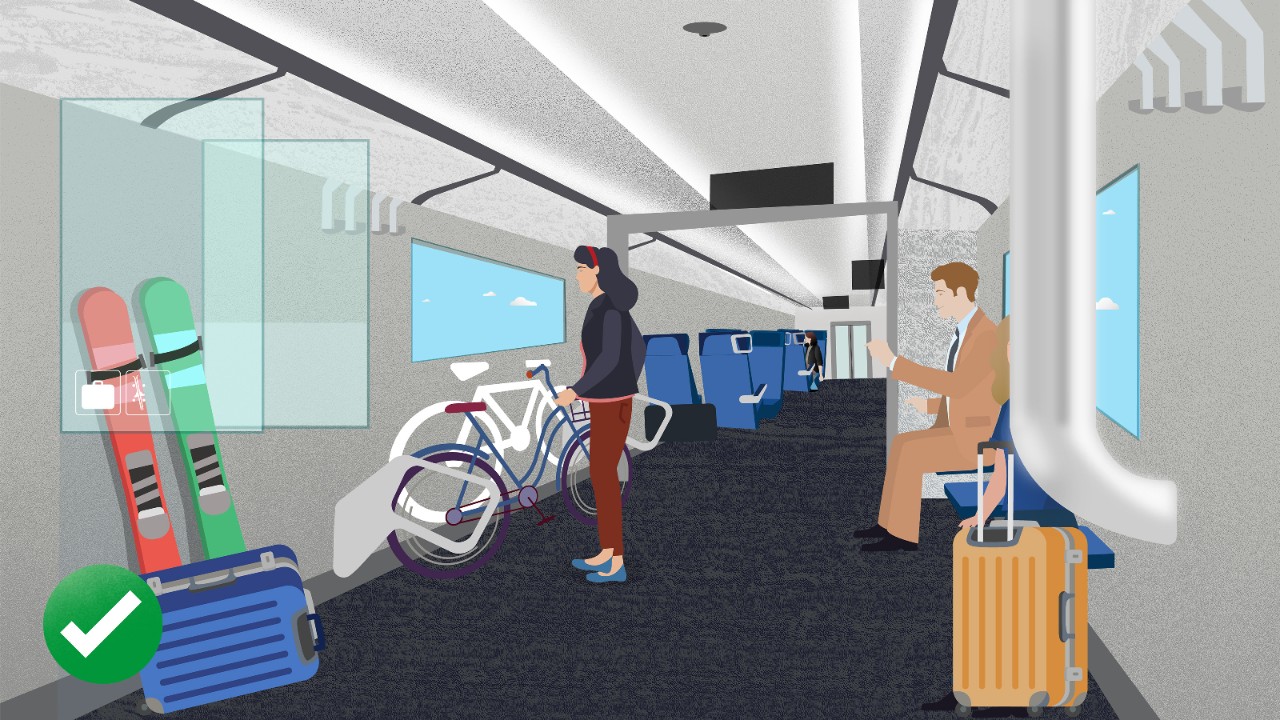
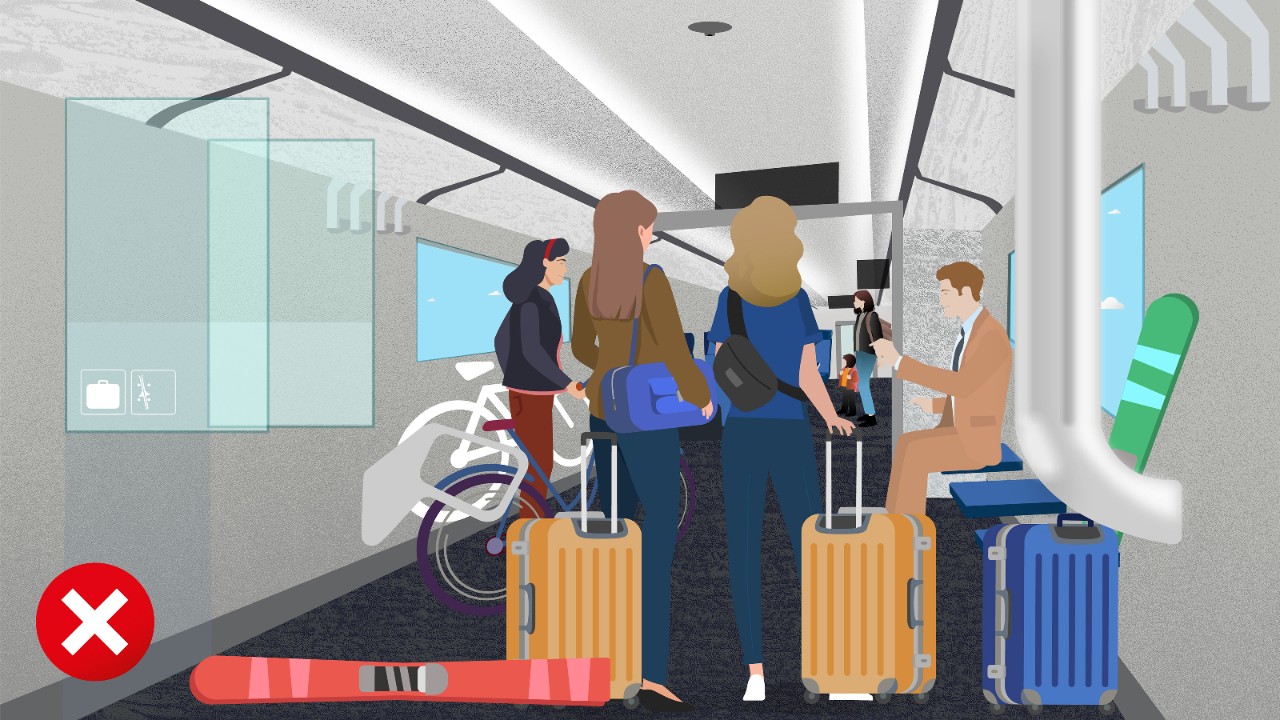
Stopping in good time.
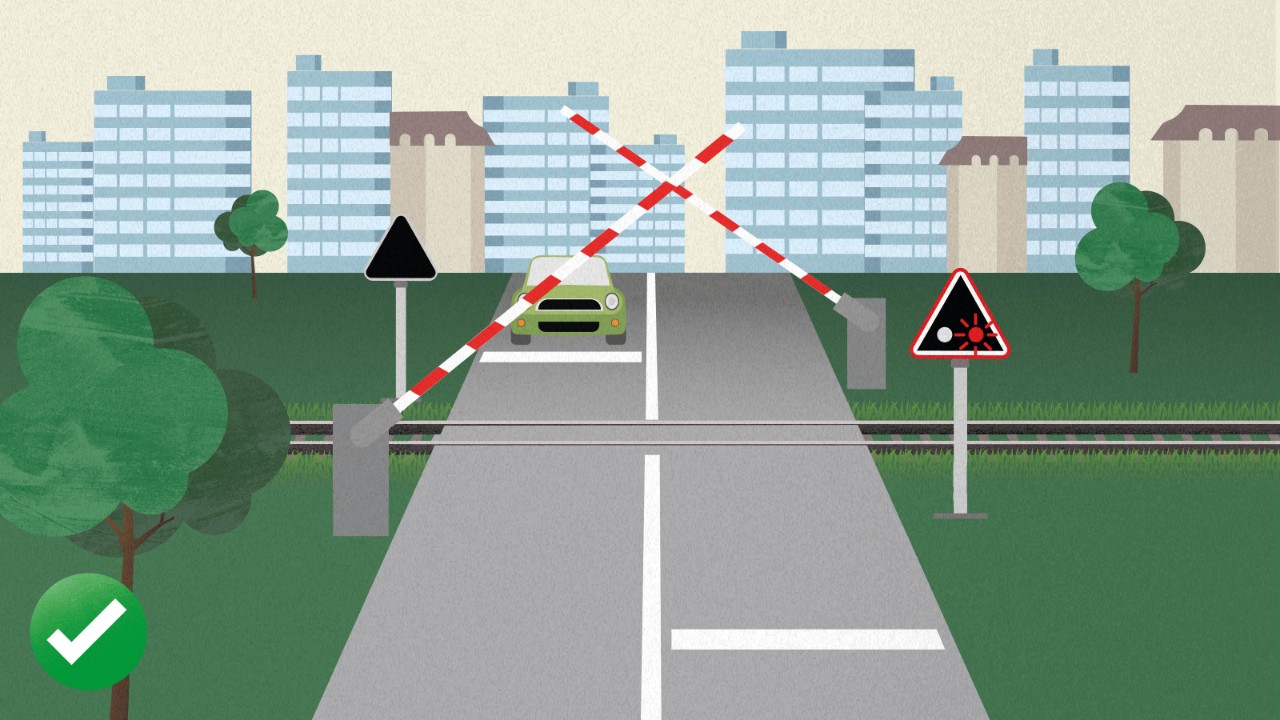
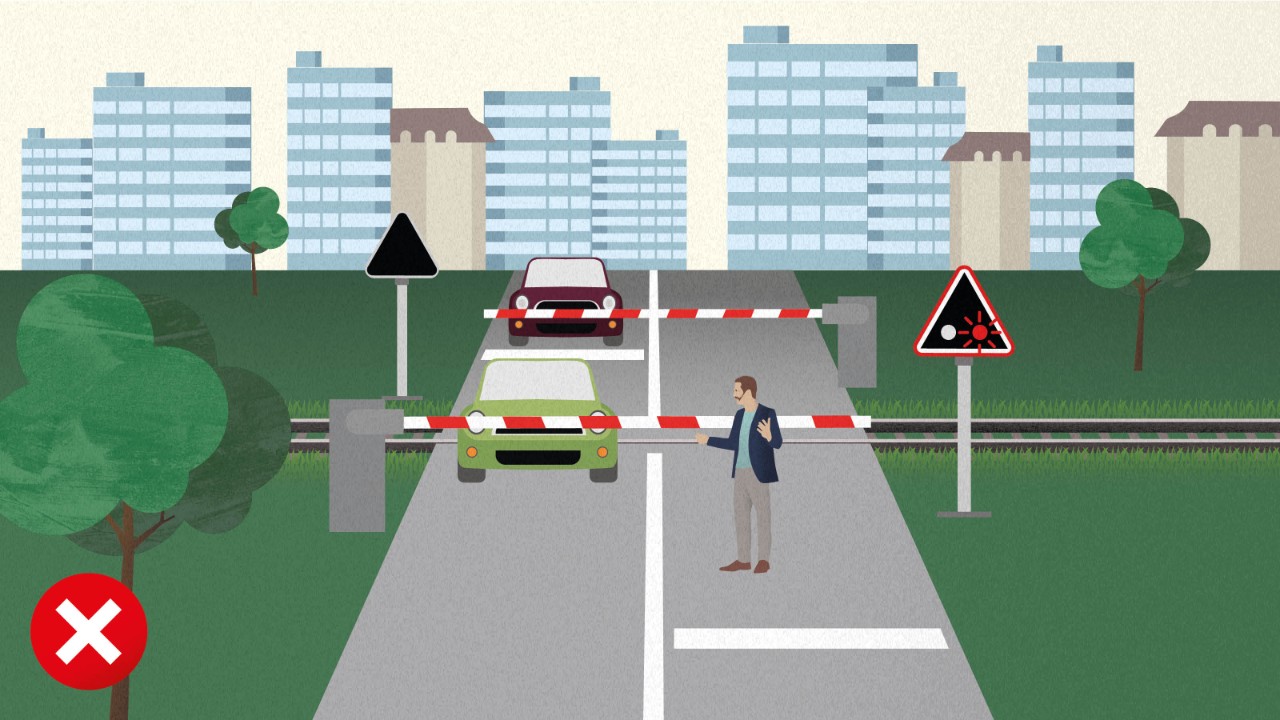
Barriers, red flashing lights or loud signals at a level crossing mean you must stop! Stop your car behind the white line or level with the St. Andrew’s cross. Wait until the train has passed and the barriers are fully open or the red flashing lights or signals have gone off. Approach a level crossing slowly and be ready to brake. In a traffic jam or stop-and-go traffic, do not drive onto the level crossing if you do not have room to exit the crossing on the other side. Wait until the road is clear so that you can drive through the level crossing without stopping.
Never attempt to drive through a level crossing if the barriers are already closing, the red warning lights are flashing or the acoustic warning signal is sounding. If your car gets trapped between the barriers, drive forward and break through the barrier. The barrier is designed to break away. Exit the level crossing immediately and get to safety before the train arrives.